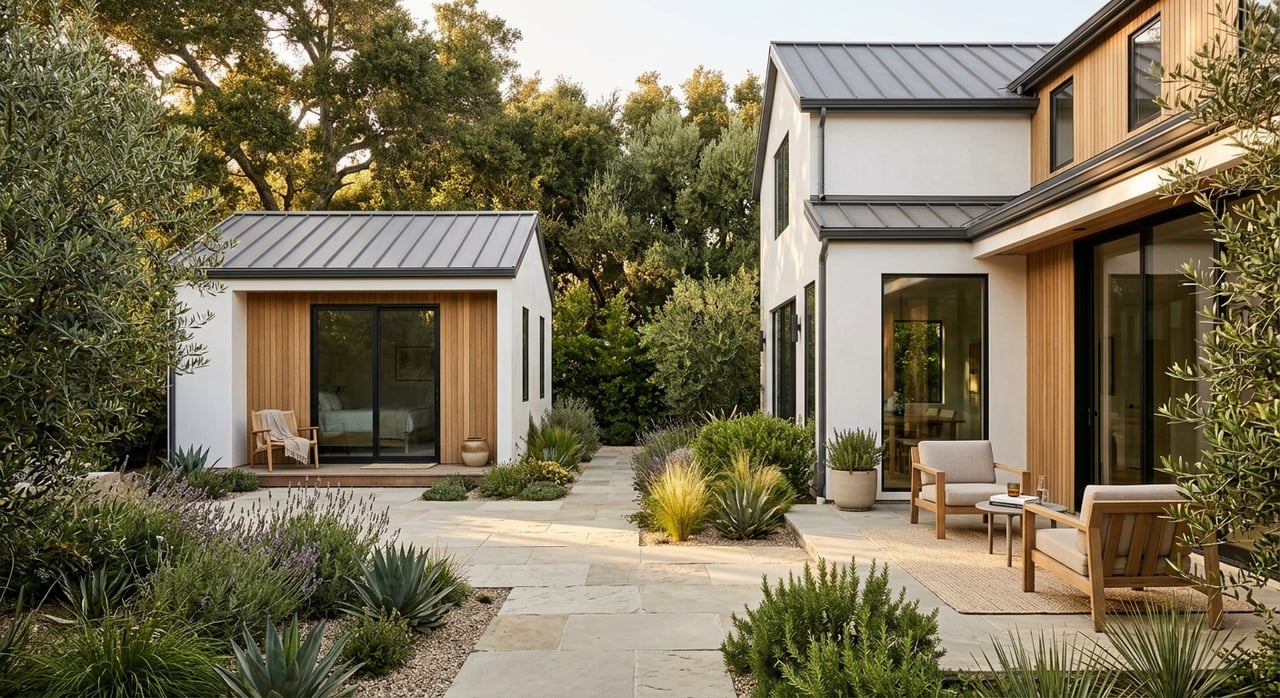
Exploring Napa ADU Opportunities for Homeowners
April 23, 2026
April 23, 2026
Wondering whether your Napa property has room for an ADU? You are not alone. Many homeowners are looking for ways to create more flexible living space, support family needs, or add rental potential without buying a new property. The good news is that Napa offers several paths worth exploring, and understanding the basics can help you move forward with more confidence. Let’s dive in.
Accessory dwelling units, or ADUs, have become an increasingly popular option across California. According to the California Department of Housing and Community Development ADU handbook, ADUs can provide income, support multigenerational living, and help older adults age in place.
That flexibility is a big reason interest has grown so quickly. The same state handbook notes that annual ADU permits rose from 1,336 in 2016 to 30,354 in 2024, and ADUs made up more than 26.6% of all homes permitted statewide in 2024.
For Napa homeowners, the appeal is practical. An ADU can give you more usable space on the property you already own, whether you want housing for family members, a private guest area, or a rental unit.
In Napa County, an ADU is a residential unit with complete independent living facilities. That means it includes a kitchen, bathroom, sleeping area, and living space. It can be attached to the main home, detached, or created within the primary residence or an accessory structure, according to the Napa County ADU page.
A junior accessory dwelling unit, or JADU, is smaller and more limited. Napa County says a JADU must be created entirely within an existing single-family home, is limited to 500 square feet or less, and may share a bathroom with the main house.
In simple terms, an ADU usually offers more independence, while a JADU is often the compact conversion option. Both can add value through flexibility, but the right fit depends on your property layout, goals, and budget.
One of the first steps is figuring out whether your home falls under the City of Napa or unincorporated Napa County. That distinction matters because each jurisdiction has its own permitting pages, review process, and local programs, as explained on the City of Napa ADU resource page.
This is a small detail that can shape your entire timeline. Rules, fees, and available incentives can differ, so it is smart to confirm your jurisdiction before you start planning design work or requesting bids.
For most ADU projects, approval is ministerial. The state handbook explains that local agencies review applications using objective standards rather than subjective design opinions. That creates a more predictable path than many homeowners expect.
In practice, this means your project is reviewed against defined rules and checklists. If your plans meet the objective standards, the process should be more straightforward than a discretionary review.
The state also sets processing timelines. HCD says the permitting agency must determine whether an ADU or JADU application is complete within 15 business days and must approve or deny a complete application within 60 business days.
That does not mean every project moves quickly from idea to permit. Revisions, missing documents, and site-specific issues can still affect the timeline, but the review window itself is more structured than many people realize.
Many homeowners assume they must live on the property to build or keep a standard ADU. The state handbook says local agencies generally cannot require owner occupancy for a standard ADU, though JADUs can trigger owner-occupancy requirements when they share sanitation facilities with the main structure.
That said, local financing or affordability programs may come with their own occupancy or rent restrictions. If you are considering an incentive program, be sure to review those details early.
Parking requirements for ADUs are limited by state law. HCD says parking cannot exceed one space per unit or bedroom, whichever is less, and some ADUs are exempt from parking requirements altogether, including certain homes within one-half mile walking distance of public transit.
Fees can also affect the project budget. ADUs of 750 square feet or less and JADUs of 500 square feet or less are exempt from impact fees, while larger units may be charged proportionately.
Utility connections depend on the type of ADU. Existing-space ADUs and JADUs generally do not require separate utility connections, while new connections or capacity charges must be proportional to the ADU’s impact.
In Napa, the biggest question is often not whether ADUs are allowed. It is whether your lot and site conditions make a specific type of ADU practical.
The City of Napa ADU guide notes that a soils report may be required if your project is in an earthquake fault or flood zone. Napa County also lists possible health and safety constraints that can delay or block a project, including groundwater or water supply issues, septic or wastewater limitations, floodplain restrictions, emergency vehicle access concerns, landslides, erosion, wildfire risk, and environmental setbacks.
This is why an early feasibility review is so important. A property may be generally eligible for an ADU, but the specific site conditions can still shape the best path forward.
Most homeowners start by looking at one of four common options:
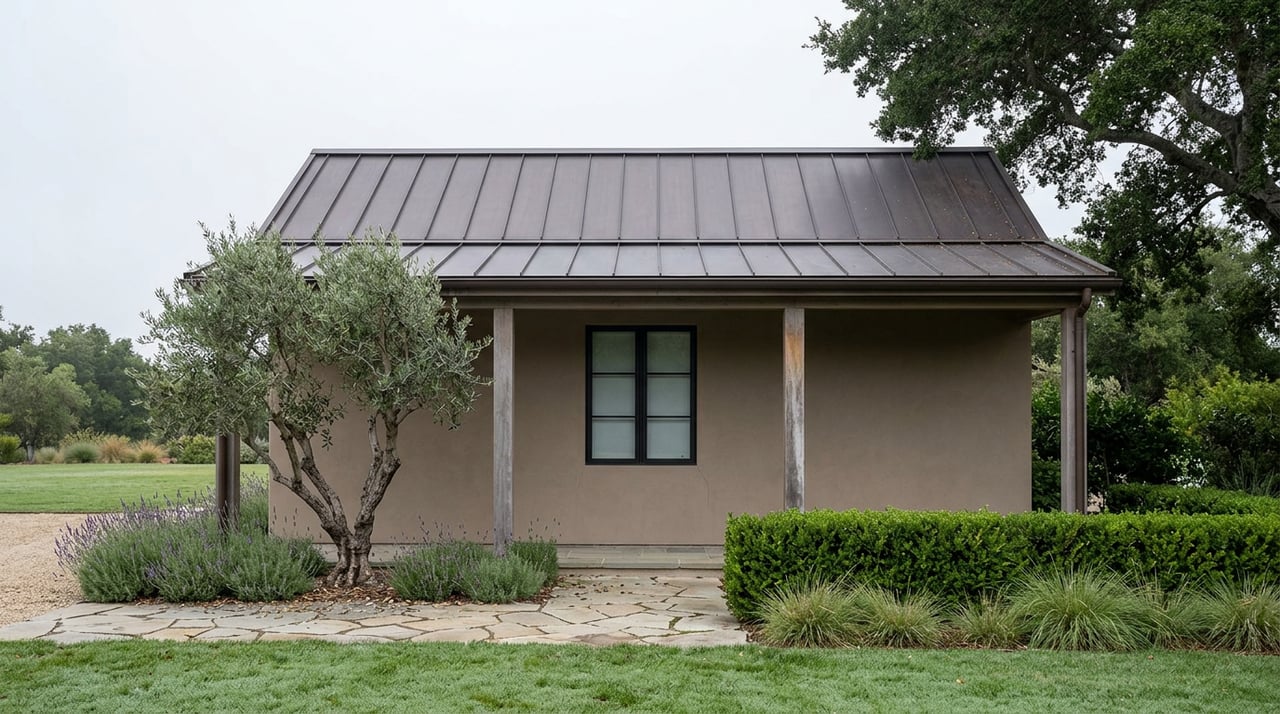
According to Napa County, ADUs may be attached, detached, or located within the primary residence or an accessory structure. The City of Napa’s programs also recognize conversion ADUs created from accessory structures, including garages.
For many homeowners, conversions are the easiest place to start. HCD notes that conversions of existing accessory structures or portions of the primary residence are not subject to the same unit-size restrictions as many new builds, which can make them more feasible than fully new detached construction.
If your property already has an older second unit, guest space, or converted structure, it may be worth asking whether that space can be legalized. Napa County offers a streamlined AB 2533 process for certain unpermitted ADUs and JADUs built before January 1, 2020.
That pathway focuses on health and safety issues and may include impact-fee relief for eligible units. For some homeowners, legalizing an existing space can be a more practical route than starting from scratch.
Napa stands out because it offers meaningful local ADU support. The City of Napa’s Junior Unit Initiative Program provides technical assistance and forgivable financing of up to $50,000 for Junior Units or conversion ADUs, plus up to $25,000 in deferred interest-free financing for conversion ADUs.
The program may also offer up to $5,000 for ADA improvements and grants for design or engineering when needed. Approved homeowners must live in either the ADU or the primary unit and rent the other to a low-income tenant.
For unincorporated areas, Napa County also offers an Affordable ADU Forgivable Loan Program for eligible projects that will charge below-market rent to qualified low- or very low-income tenants. These programs will not fit every homeowner’s goals, but they are important to know about before you set your budget.
If you want to reduce uncertainty, pre-reviewed or pre-approved plans may be worth exploring. The City of Napa ADU page says the city accepts pre-reviewed ADU plans as part of a permit application, and Napa County notes that pre-approved plans can shorten the review window to 30 calendar days for some projects.
That can be a useful option if you want a more streamlined starting point. It may not solve every site-specific issue, but it can reduce design guesswork early in the process.
Before you commit to plans or construction pricing, it helps to work through a few practical questions:
City reporting also notes Napa’s partnership with the Napa Sonoma ADU Center, which offers feasibility consultations, cost calculations, and pre-approved plans for homeowners considering an ADU. For many property owners, that makes the early research process much easier.
If you are buying, selling, or holding property in Napa, ADU potential can be an important part of the conversation. The value is not just about extra square footage. It is about flexibility, future use, and the range of possibilities a property may offer over time.
That is especially true in Wine Country, where buyers often look closely at guest space, multigenerational living options, rental flexibility, and properties with room to adapt. Understanding what may be possible on a parcel can help you make more informed decisions before you list, purchase, or renovate.
If you are weighing ADU potential as part of a sale, purchase, or property strategy in Napa or nearby Wine Country, working with an advisor who understands permits, parcel fit, and local market context can make the process much clearer. To talk through your property goals, connect with Amanda Shone.
Stay up to date on the latest real estate trends.
Your real estate journey starts here.