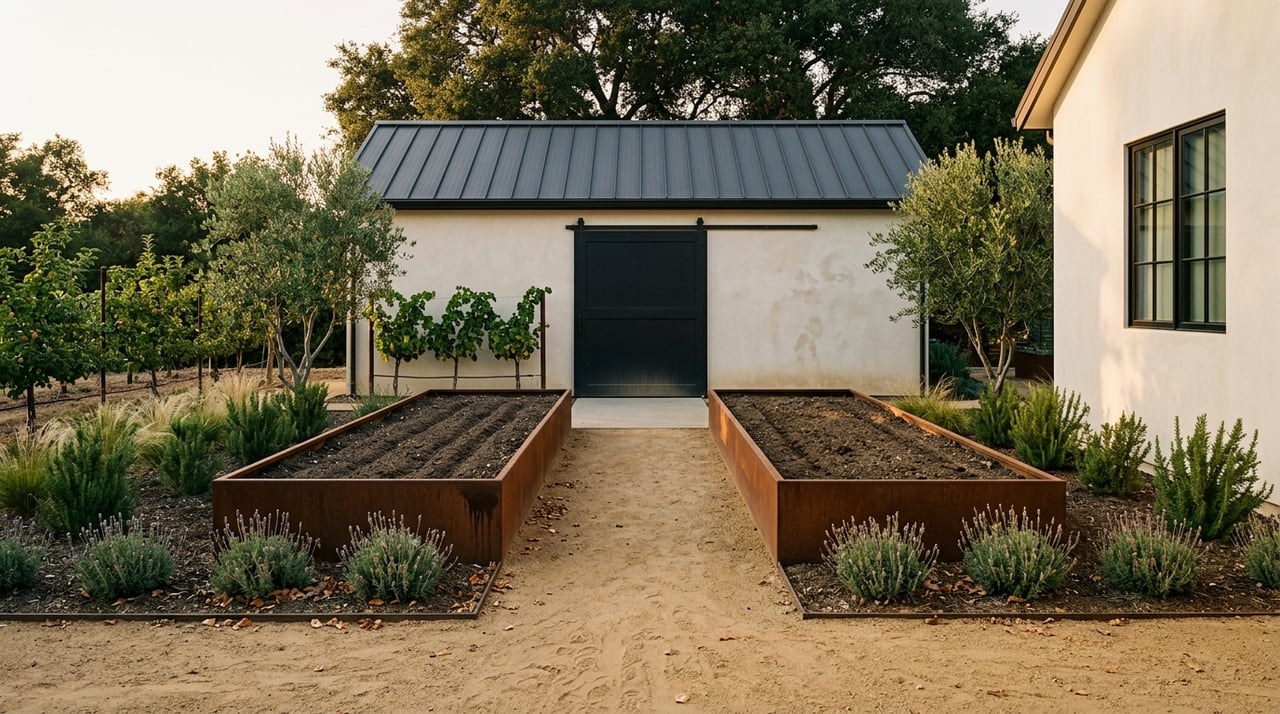
Petaluma Acreage and Hobby Farms: What Buyers Should Know
May 7, 2026
May 7, 2026
If you picture a little more land, a few animals, a garden that finally has room to grow, and a slower pace just outside town, Petaluma is easy to understand. What gets tricky is knowing where true acreage actually shows up, what a parcel can support, and which details matter before you fall in love with a property. This guide walks you through how acreage and hobby farm living works around Petaluma, what buyers are most likely to find, and the due diligence steps that can help you move forward with confidence. Let’s dive in.
Petaluma has a long agricultural history tied to egg, poultry, and dairy production. The city also operates with an Urban Growth Boundary and has limited vacant land inside that boundary. For you as a buyer, that usually means the best acreage and hobby farm opportunities are found around the city’s edges and in unincorporated Sonoma County, not in the more compact city core.
That local planning framework shapes the market in a real way. In Sonoma County, area plans and specific plans guide development, and new subdivisions or development in planning areas need to align with the county’s General Plan and the relevant local plan. In practice, that means rural properties near Petaluma often require careful parcel-by-parcel review.
Acreage around Petaluma is not one-size-fits-all. Some properties feel semi-rural and residential, while others sit in clearly agricultural areas with very different density patterns. Knowing the common parcel ranges can help you set realistic expectations.
In the City of Petaluma’s RR zone, the minimum lot area for a new subdivision is 2 acres, with a minimum lot width of 150 feet. That gives you a useful baseline at the city’s more rural edges, but nearby county areas can vary a lot more.
The West Petaluma Area Plan gives a clear snapshot of how varied this market can be. It describes 5-acre densities along the south fringe, 3-acre densities west of Liberty Road and Eucalyptus Avenue, 3-acre densities between Thompson Lane and Liberty-Eucalyptus, and 2-acre densities east of Thompson Lane.
That same plan also explains why two similar-looking parcels may not have the same future potential. Additional divisions can be limited by high water tables, septic constraints, poor water quality, access issues, and agricultural compatibility. So if you are thinking beyond the existing home and land, those site conditions matter early.
If you move into more agricultural territory, the parcel story changes. The Petaluma Dairy Belt Area Plan describes Land Extensive Agriculture areas as places with dairies, sheep and cattle ranches, grazing, silage, and related activities. In those areas, residential density is much lower, roughly one dwelling per 60 to 160 acres.
The same plan identifies Diverse Agriculture parcels as a transition between rural residential and more intensive agricultural land. Those parcels are generally 3 to 20 acres, with a density range of 10 to 20 acres per dwelling unit. If you want room for small-scale agricultural use without stepping into large commercial-scale land, this can be an especially relevant range to watch.
Penngrove is another useful reference point if you are searching for a rural lifestyle near Petaluma. The Penngrove Area Plan describes the community as focused on retaining a rural, small-town lifestyle and notes that a detached dwelling on a parcel of one-half acre or more is one of the primary features tied to that character.
For you, that means nearby lifestyle options can include everything from modest rural parcels to larger agricultural holdings. The right fit depends on whether you want space for gardens and a few animals, wider separation between homes, or land that may support more substantial agricultural use.
The phrase hobby farm sounds simple, but what a property can actually support depends heavily on zoning and parcel size. Sonoma County defines agriculture broadly and includes the raising and maintaining of farm animals such as horses, donkeys, and mules.
In the county’s rural-residential framework, limited crop production and farm-animal husbandry are allowed in RR zoning. In AR zoning, unlimited crop and farm-animal husbandry is allowed on parcels of 2 acres or more. That makes zoning one of the first things you should verify when you are evaluating a property for hobby farm use.
Depending on the parcel and zoning, small-scale farm living may include more than just open land. Sonoma County allows home occupations in agricultural and residential zoning districts, including RR and AR.
There are also county rules that may help support working land use. On parcels of 5 acres or more, some agricultural buildings designed to house farm machinery, animals, supplies, or products harvested from the parcel can qualify for a building permit exemption if an agricultural use already exists. In certain agricultural zones, small-scale farm retail sales facilities up to 500 square feet are allowed on parcels of 2 acres or more.
These details can be valuable if you want a property that functions beyond simple residential use. Still, the key is matching your goals to the parcel’s exact zoning and development standards before you commit.
Many buyers assume that if a property has enough acreage, animals are automatically allowed. Around Petaluma, that is not always the case.
Sonoma County allows horse boarding only in certain zoning districts. On parcels of 2 acres or smaller, the allowance is limited to one horse per 20,000 square feet regardless of zoning. If your wish list includes horses, livestock, or boarding, you will want to confirm both zoning and the exact use standards, not just the lot size.
Acreage purchases often come with more moving parts than an in-town home search. That does not mean they are harder in the wrong hands, but it does mean your review period should be used carefully.
In the Petaluma area, the most important questions often involve restrictions on the land, wastewater capacity, water supply, fire safety, flood exposure, drainage, and access. These are not small details. They shape how you live on the property and what changes may be possible later.
One of the first things to ask is whether the parcel is subject to a Williamson Act contract, an agricultural preserve, or a farmland security zone. Sonoma County’s agricultural preserve program is designed to keep land in agricultural or open-space use, and farmland security zones add a longer-term voluntary restriction on top of agricultural preserves.
This matters because those restrictions can affect future use and development options. County guidance also states that ADUs are prohibited on properties subject to a Williamson Act contract under the current uniform rules.
Outside sewered areas, water and wastewater are often the biggest practical variables. Sonoma County’s 2024 septic study identified more than 36,000 local parcels with septic systems, which shows how common on-site wastewater treatment is across the county.
The county also advises that where public sewer is not available, on-site wastewater capacity is a significant factor and should be investigated before moving forward with design work. For acreage buyers, that makes septic capacity, well information, and site conditions central parts of due diligence.
Fire safety is another major layer for rural and semi-rural parcels near Petaluma. Sonoma County’s vegetation-management program applies to improved and unimproved parcels in unincorporated areas, and the county requires defensible-space inspections under its Fire Safety Ordinance.
County fire guidance also emphasizes access roads, driveways, vegetation management, water supply, and addressing. If a property is in a State Responsibility Area or a High or Very High Fire Severity Zone, documentation showing compliance with defensible-space requirements may become especially important.
Flood and drainage checks should be part of your early review, not an afterthought. Official flood-hazard mapping is available through FEMA’s Flood Map Service Center, and Sonoma County’s rural plans also point to access, septic, and water constraints as key factors in whether development or subdivision is feasible.
For you, that means it is smart to review floodplain information, driveway access, and drainage conditions during the offer period. A beautiful parcel can still come with practical limits that need to be understood upfront.
The best acreage purchases usually involve local professionals early. Sonoma County points buyers toward Permit Sonoma Planning staff, the Well & Septic Division, Fire Prevention, and the Sonoma County Agricultural Commissioner.
Each one plays a different role. Planning staff can help with zoning and project-review conformance, the Well & Septic Division handles septic and water-well permitting, Fire Prevention oversees vegetation-management and fire-safe standards, and the Agricultural Commissioner enforces agricultural laws. For farm-business questions, the county also points buyers to the Agricultural Ombudsman at UC Cooperative Extension.
If you are shopping for land or a hobby-farm property, having an agent who understands how to coordinate this process can make a real difference. You want someone who can help you connect the lifestyle side of the purchase with the technical side, especially when zoning, septic, access, or long-term property plans are part of the conversation.
Acreage and hobby farm living around Petaluma can be deeply rewarding. You can find a meaningful mix of privacy, open space, agricultural history, and proximity to town, but the market is highly parcel-specific.
The biggest takeaway is simple: acreage alone does not tell the whole story. The right property for you depends on zoning, area-plan context, site conditions, water and septic feasibility, fire safety, and any land-use restrictions already in place.
If you are considering a rural home, a small farm property, or larger acreage near Petaluma, it helps to have guidance that is both lifestyle-minded and technically grounded. For thoughtful support with acreage, land, and complex Wine Country property searches, connect with Amanda Shone.
Stay up to date on the latest real estate trends.
Your real estate journey starts here.