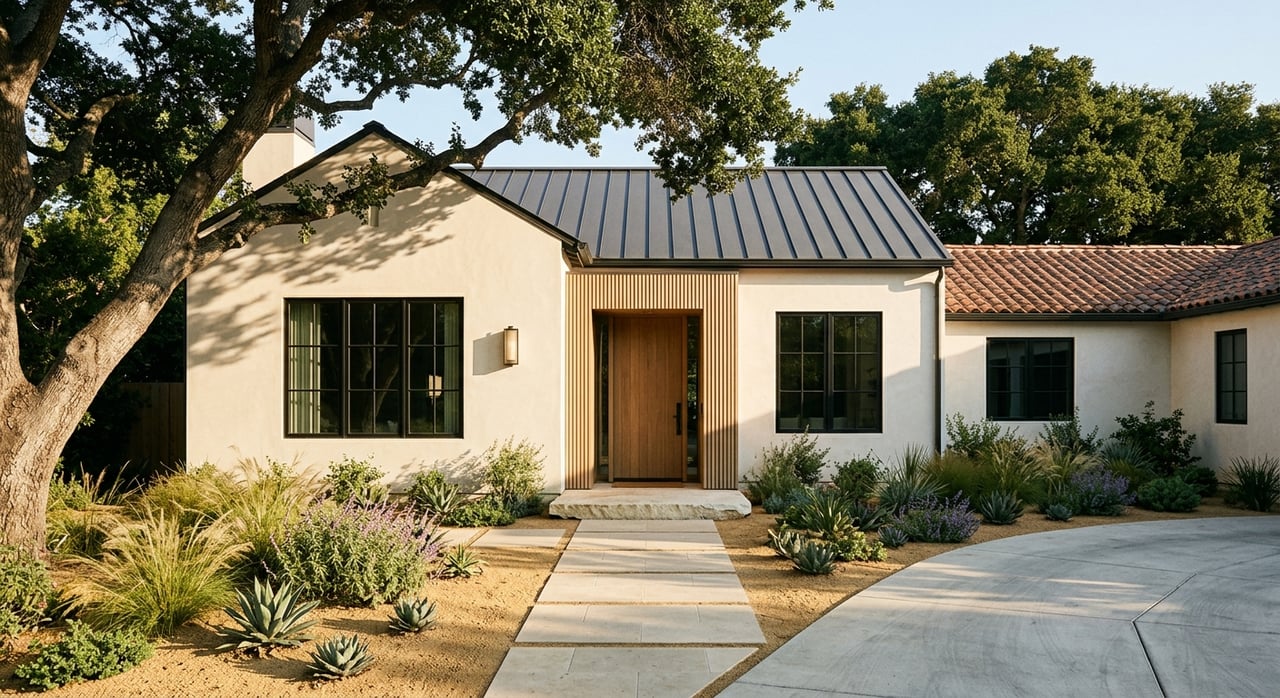
How To Plan Your Move-Up Home Purchase In Santa Rosa
May 14, 2026
May 14, 2026
If your current home no longer fits the way you live, you are not alone. Many Santa Rosa homeowners reach a point where they want more space, a different layout, a larger lot, or a property with long-term flexibility, but making that move can feel complicated when you have to sell one home and buy another in the same market. This guide will help you think through timing, financing, neighborhood fit, and local due diligence so you can plan your next move with more clarity and confidence. Let’s dive in.
Santa Rosa remains an active, high-cost market, which matters if you are trying to coordinate a sale and purchase at the same time. Realtor.com’s April 2026 snapshot shows a median listing price of $850,000, 698 homes for sale, and a median 32 days on market. Zillow’s Sonoma County figures show 908 homes for sale, a median sale price of $765,333, and 24 days to pending in early 2026.
These numbers come from different sources and measure different things, so it is best to read them as directional rather than exact. Together, they suggest a market where well-prepared buyers and sellers need to move with a plan. Financing also matters more in this environment, especially with Freddie Mac reporting a 30-year fixed rate of 6.37% on May 7, 2026.
For most homeowners, selling first is the more common path. The CFPB notes that homeowners normally try to sell their current home before buying another one, and that both sides of the move come with significant costs. That includes property taxes, homeowners insurance, other insurance, moving costs, repairs, and home improvements.
Selling first can reduce pressure on your budget because you know how much equity you have to work with. It can also make your next purchase cleaner from a financing standpoint. In a market like Santa Rosa, that clarity can help you act faster when the right home appears.
Buying first can still make sense in some cases, especially if you need continuity for work, timing, or household logistics. A bridge loan is the classic short-term option for this scenario, and CFPB lending rules treat temporary bridge loans of 12 months or less as a distinct category when you plan to sell your current home within 12 months.
Before you choose a path, ask a lender a few practical questions:
A move-up purchase is not just about affording a higher price point. It is also about understanding how your full monthly and annual costs may change once you own the next property.
One of the biggest surprises for long-time owners can be property taxes. Sonoma County taxes secured property at 1% ad valorem, plus voter-approved bonds and assessments, and the Assessor states that assessed value resets at change of ownership. Supplemental assessments can also apply after a purchase or new construction.
That means your tax bill on a new Santa Rosa home may be materially higher than what you pay on your current home, even before insurance is added. If you have owned your starter home for many years, this is a key number to estimate early. It can affect what feels comfortable far more than the sticker price alone.
More square footage is not always the same thing as a better fit. A smart move-up purchase should support how you want to live now and give you flexibility for what comes next.
For some buyers, that means prioritizing a larger lot or a more private setting. For others, it means finding a layout with better separation of space, room for guests, or a home office that works long term. In Santa Rosa, it can also mean thinking about whether a property offers ADU or JADU potential.
Santa Rosa allows ADUs on lots that allow single-family or multifamily residential use, and JADUs on lots with a single-family dwelling. If multigenerational living, guest space, or future rental use matters to you, it is worth evaluating that potential upfront rather than treating it as an afterthought.
Santa Rosa offers a wide range of housing forms, lot sizes, and settings. According to the city’s Housing Element, the east side of Route 101 is mostly single-family neighborhoods on larger lots and higher elevations. The west side includes more small-lot and multifamily housing closer to Route 101 and downtown, while the Downtown and Station Area is more mixed or transitional.
That distinction is helpful because it gives you a more practical way to compare areas. Instead of asking which side of town is “better,” it is more useful to ask which part of Santa Rosa fits your priorities for lot size, terrain, housing style, and access.
If you want a more urban feel with stronger transit or infill characteristics, the city’s Priority Development Areas are good places to compare. These include the Downtown Station Area, Mendocino/Santa Rosa Avenue Corridor, North Station Area, Roseland, and the Sebastopol Road Corridor.
If you prefer a larger home or a different topographic setting, hillside and rebuilt-home areas may be part of your search. The city lists Fountaingrove and Coffey Park among its Resilient City Zoning Areas, and notes that Fountaingrove is a hillside area while Coffey Park has clearly defined neighborhood boundaries.
Santa Rosa’s micro-markets vary widely, which is why broad city averages only tell part of the story. Current Realtor.com neighborhood medians show a wide spread, including Fountaingrove at $1.75 million, Skyhawk at $1.247 million, Oakmont Village at $759,000, Junior College at $735,000, Montgomery Village at $687,500, Southwest Santa Rosa at $669,900, and Roseland at $567,000.
Days on market vary too. Realtor.com reports figures ranging from 21 days in Montgomery Village to 45 days in the Wright Area Action Group.
This matters for move-up buyers because your sale timeline and your purchase timeline may not move at the same speed. If you are selling in one micro-market and buying in another, the pace may feel very different on each side of the transaction. Planning around that difference can help you avoid rushed decisions.
Santa Rosa’s General Plan 2050, design guidelines, residential density information, and Missing Middle Housing program all point to a city with varied housing choices and evolving land use patterns. The Missing Middle Housing program emphasizes house-scale buildings, connected green space, and access to nearby services and transit.
For you as a buyer, that means the right neighborhood decision often comes down to lifestyle mechanics. Think about how often you want to drive, what kind of lot and building form you prefer, and whether you value easier access to downtown, transit, or nearby services.
It can also help to think in time horizons. The home that works for your household over the next seven to ten years may be more valuable than a home that only solves today’s space issue.
In Santa Rosa, due diligence should include hazard exposure and property-specific rules. The city states that all new construction within a Wildland-Urban Interface Fire Area must meet California Building Code Chapter 7A.
The city also notes that after CAL FIRE’s February 2025 map update, only parcels mapped as High or Very High Fire Severity Zones need AB 38 compliance. Santa Rosa has been updating its Wildland-Urban Interface boundaries using the new CAL FIRE maps.
If you are comparing homes in different parts of the city, this is an important filter. It can affect how you evaluate a property, what inspections or reports you may want, and how a home fits your overall comfort level.
Flood exposure is another issue worth reviewing before you write an offer. Santa Rosa says the FEMA Santa Rosa Creek Watershed flood-mapping project is updating local flood zones.
According to the city, properties in a Special Flood Hazard Area can face stricter building standards, and federally backed mortgages can require flood insurance once the maps are effective. Santa Rosa also participates in FEMA’s National Flood Insurance Program.
For move-up buyers, that means flood mapping is not just a technical detail. It can affect your monthly costs, your lender requirements, and your long-term ownership experience.
Santa Rosa’s evacuation-zone lookup tool is another useful planning step. If neighborhood safety logistics are part of your decision-making, it is smart to know the evacuation zone before you write an offer.
This is especially helpful when you are comparing areas with different terrain, access patterns, or rebuilding histories. It gives you a clearer picture of how a home functions in real life, not just how it looks during a showing.
A successful move-up purchase usually starts before you tour homes. In Santa Rosa, where values, taxes, market pace, and local conditions can vary sharply by area, preparation gives you options.
A strong planning checklist includes:
The goal is not just to buy a larger house. The goal is to move into a home that matches your payment comfort, future plans, and the realities of owning property in Santa Rosa.
If you are planning a move-up purchase in Santa Rosa, working with a local advisor who understands both lifestyle fit and property-level details can make the process feel much more manageable. When you are ready to map out your next step, connect with Amanda Shone for thoughtful, locally grounded guidance.
Stay up to date on the latest real estate trends.
Your real estate journey starts here.