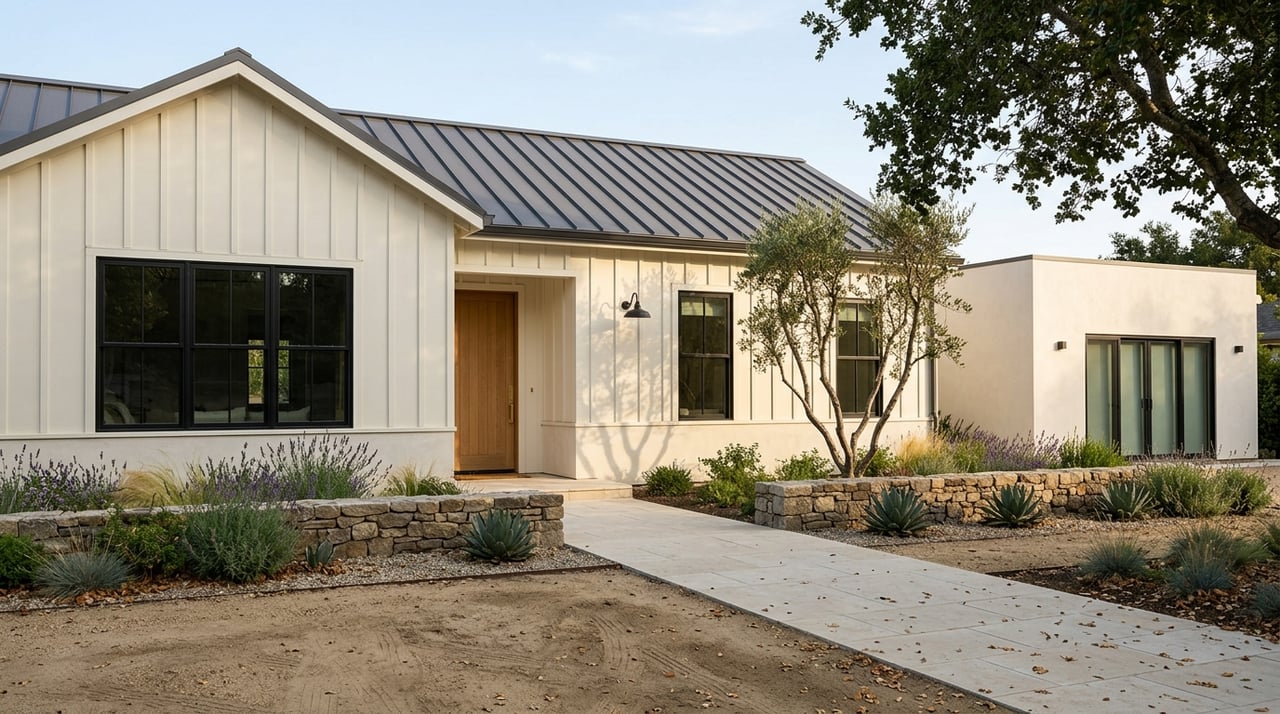
Petaluma Homes From Farmhouse To Contemporary
July 2, 2026
July 2, 2026
Looking at homes in Petaluma can feel a bit like flipping through a design book in real life. In one part of town, you may find a Victorian cottage or an early farmhouse-era home. In another, you may see a postwar ranch or a newer townhome built for compact, modern living. If you want to understand how Petaluma homes vary, and what that means for your search, this guide will help you compare style, setting, and practical tradeoffs. Let’s dive in.
Petaluma’s housing story reflects its long history as a river, rail, and agricultural community. The city was incorporated in 1858, and that history still shows up in the buildings and neighborhood patterns you see today.
What makes Petaluma especially interesting is that it is not a one-style market. You can find early residential areas near downtown, large stretches of postwar housing, and newer infill projects shaped by limited vacant land inside the Urban Growth Boundary. For buyers, that means your options can look very different depending on the part of Petaluma you explore.
Some of Petaluma’s oldest homes sit west of downtown and in areas south and east of the commercial core. City historic-resources reporting describes these early neighborhoods as places where freestanding single-family homes developed around the town center, creating some of the city’s most architecturally layered streets.
In these areas, you may see Italianate, Carpenter Gothic, Queen Anne, Second Empire, and simpler Victorian cottage styles. As Petaluma grew into the early twentieth century, Craftsman, Spanish Revival, Mediterranean Revival, Tudor Revival, Neoclassical, and Colonial Revival homes added even more variety.
The farmhouse side of Petaluma’s housing story is also real, not just a marketing phrase. The city’s historic-resources report identifies the Ellis-Martin Farmhouse as a National Register resource, which helps connect today’s housing market to the area’s agricultural roots.
Two local districts stand out when you want to understand older Petaluma homes. Oakhill-Brewster is described by the city as one of Petaluma’s earliest residential neighborhoods, with architecture ranging from the 1850s through the 1980s.
The A Street Historic District offers a different mix. It includes residences, offices, churches, and apartments, with nearly all buildings constructed before 1925. Together, these areas show how Petaluma’s older homes are part of a broader historic fabric rather than isolated pockets.
Older homes often offer details that are hard to replicate. You may be drawn to original facades, period proportions, established streetscapes, or the sense of place that comes with long-standing neighborhoods.
At the same time, older housing usually requires more careful evaluation. Petaluma’s housing element says about 67 percent of the city’s housing stock is at least 30 years old, and less than 3 percent was built in the last decade. The same document notes that homes over 30 years old may need work related to plumbing, roofing, or foundations.
That does not mean older homes are a poor choice. It means you should weigh charm and character alongside likely upkeep, renovation costs, and the condition of major systems.
If you are considering a home in a historic district, it is important to look beyond style alone. In Petaluma, exterior work on buildings in a historic district typically requires some level of discretionary review by the city.
The city advises owners to review district guidelines and the Secretary of the Interior standards before starting exterior changes. In practical terms, buyers should verify what may apply before assuming they can freely alter windows, facades, porches, or additions.
For some buyers, that added review is worth it because it helps preserve the look and continuity of older neighborhoods. For others, it may shape the type of property they choose, especially if major exterior updates are part of the plan.
After World War II, Petaluma changed in a big way. The city’s historic-resources report says suburbanization, the construction of US-101 in the 1950s, and the conversion of former agricultural land into housing pushed a large share of new growth to the east side of the river.
That period added postwar tract housing in Minimal Traditional, Ranch, and Modern styles. These homes created an important middle layer in the market, sitting between the city’s oldest downtown-adjacent homes and its newest infill developments.
Ranch-era and tract homes often attract buyers who want a more straightforward floor plan and a different renovation path than a nineteenth-century home may offer. In many cases, these homes can feel more familiar in layout and function, even if the finishes vary widely from one property to the next.
The city’s historic-resources report says about 43 percent of Petaluma parcels contain buildings constructed between 1972 and 2000. That is a significant share of the housing stock, and it helps explain why so many buyers compare west-side historic charm with east-side postwar practicality.
One ranch home may be extensively updated, while another may still reflect original materials and room configurations. Because Petaluma has a large amount of older housing overall, condition becomes just as important as architectural style.
When you look at ranch-era homes, it helps to think about systems, maintenance history, and renovation scope. A simpler style does not always mean a simple project, but it can offer a more predictable path for buyers who want to update over time.
The newest side of Petaluma looks different from the city’s older growth pattern. Planning documents say vacant land inside the Urban Growth Boundary is limited, and much of what remains is on the outer edge or is harder to develop. Because of that, future housing is expected to come largely through infill and transit-accessible development.
That shift has encouraged a wider mix of housing types. Instead of relying mainly on large-lot expansion, newer Petaluma housing often includes townhomes, condos, attached units, smaller-lot projects, and homes built within shared-site communities.
Recent city project pages help illustrate what contemporary Petaluma can mean:
These examples suggest that newer housing in Petaluma often favors compact, planned, or shared-site living rather than large-scale greenfield subdivisions.
Petaluma is also promoting a wider range of housing options through ADUs. The city says homeowners are allowed to build units on their lot, and it has reduced fees and development requirements for those units.
General-plan outreach materials note that much of the city’s ADU development has occurred in western Petaluma, while many eastern planned unit developments historically limited ADUs until recent state legislation changed those rules. For buyers who want flexibility, guest space, or future property-use options, this is an important topic to review early.
If you are deciding between a farmhouse-era home, a ranch property, or a newer contemporary home, the right fit often comes down to how you want to live and what level of upkeep you want to manage.
Here is a simple way to think about the tradeoffs:
| Home type | Often offers | Often requires |
|---|---|---|
| Historic or farmhouse-era | Architectural character, period details, established setting | More maintenance sensitivity, closer review of condition, possible exterior review rules |
| Ranch or postwar tract home | More conventional layouts, broad inventory, varied update potential | Careful review of systems and renovation history |
| Contemporary infill, townhome, or condo | Updated systems, compact living, newer construction patterns | Smaller private lots, denser forms, possible shared-site features |
This is where local context matters. In Petaluma, your decision is rarely just about style. It is also about lot size, maintenance expectations, renovation flexibility, and how the property fits your long-term plans.
For buyers, Petaluma offers more variety than many cities of similar size. If you want historic detail and a strong sense of architectural continuity, older neighborhoods may stand out. If you prefer practical layouts or a more modern footprint, postwar and contemporary options may be a better match.
For sellers, that variety creates an opportunity to position a home around its true strengths. A historic home may benefit from clear storytelling around architectural character and setting. A ranch property may appeal through layout, updates, and ease of living. A newer home may stand out for efficient design, all-electric features, or lower-maintenance living.
That kind of positioning is especially important in a market like Petaluma, where buyers are often comparing very different home types at the same time. Clear guidance helps you understand not just what a home is, but how it fits your goals.
Whether you are drawn to a farmhouse-era property, a classic ranch, or a more contemporary home, Petaluma gives you a wide range of paths. If you want experienced local guidance as you compare neighborhoods, home styles, ADU potential, or the details that can shape value over time, connect with Amanda Shone.
Stay up to date on the latest real estate trends.
Your real estate journey starts here.