What West Petaluma's Price Premium Is Really Paying For
October 1, 2026
October 1, 2026
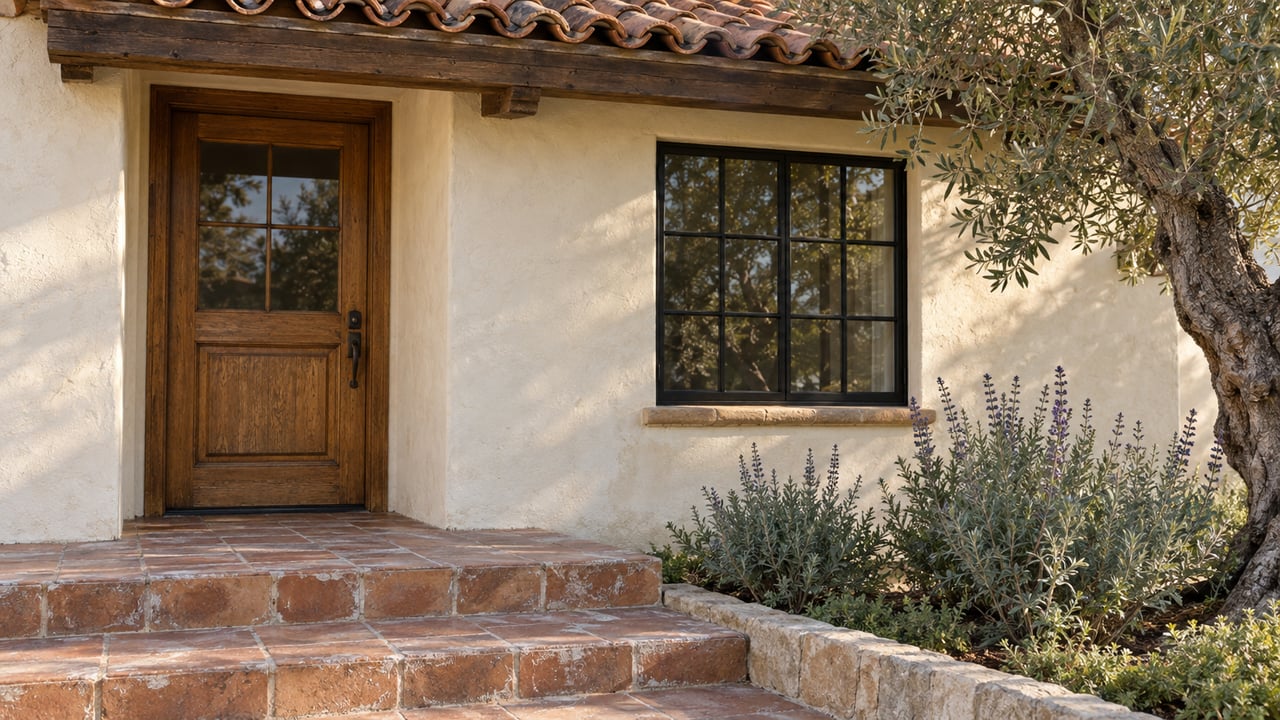
Two renovation projects are sitting on Petaluma's planning docket right now, both on Oak Street, both a block or two from each other: an addition and renovation at 528 Oak Street, and a renovation and expansion next door at 526 Oak Street. Neither is unusual for this part of town. What makes them worth knowing about, if you're shopping Petaluma, is what they had to go through before a shovel touched the ground. Both sit inside a locally designated historic district, which means the exterior design, the materials, and in some cases the very massing of the addition had to clear a review process that most house projects in this city never face.
That review process is the piece missing from the way people usually compare Petaluma's east and west sides. The conventional read is that West Petaluma and Downtown cost more because they're prettier, older, and closer to the river. That's true as far as it goes. But a meaningful part of the price gap is something else entirely: a regulatory ceiling on how much of that housing stock can ever be enlarged, altered, or replaced. Scarcity that's baked into the zoning code prices in just as hard as scarcity that's baked into the landscape.
Year-end 2025 figures from the local MLS put East Petaluma's average sale price at $944,310 and West Petaluma's at $1,243,694, a premium of roughly 32 percent for crossing the river. That gap widens further once you narrow in on Downtown itself. In March 2026, Downtown Petaluma posted a median sale price of $1.406 million and roughly $1,010 per square foot, though that figure came from just three closed sales that month, small enough that one unusual property can swing the number. Southeast Petaluma, by contrast, posted a median of $830,000 and $438 per square foot the same month. Citywide, Petaluma's median sale price sat at $900,000 over the three months ending June 2026, at roughly $527 per square foot.
| Area | What it looked like | Window |
|---|---|---|
| East Petaluma | $944,310 average sale price | Year-end 2025 |
| West Petaluma | $1,243,694 average sale price | Year-end 2025 |
| Downtown Petaluma | $1.406M median, ~$1,010/sq ft (small sample) | March 2026 |
| Southeast Petaluma | $830,000 median, $438/sq ft | March 2026 |
| Petaluma citywide | $900,000 median, $527/sq ft | 3 months ending June 2026 |
None of that is surprising as a headline. What's worth pausing on is why the gap holds even when the homes themselves aren't dramatically different in size or condition.
Petaluma has three overlapping historic designations, and all three sit on the west side of the river or wrap around Downtown.
East Petaluma has no equivalent designation. Its housing stock skews toward mid-century construction and newer subdivisions, the kind of homes that go through a standard building permit review and nothing more.
Inside any of the three districts, the city's own guidance is direct: almost all exterior work requires some level of discretionary review, on top of the standard building permit. Altering, moving, or demolishing a contributing structure requires a Certificate of Appropriateness, a separate application that has to show how the proposed change relates to the surrounding district, not just to code minimums. Projects like the Oak Street renovations move through this process as a matter of course, which is presumably why both show up on the city's active planning list rather than as completed permits pulled off the counter.
Demolition carries its own trigger. Any structure built before 1945 gets flagged for review before it can come down, and the city's definition of demolition is broader than most buyers expect. Removing half or more of a building's exterior walls counts. So does adding a second story that isn't designed to visually read as separate from the original structure. A buyer planning a substantial rebuild on a west-side lot needs to know that "gut it and start over" may not be the straightforward option it would be on a 1970s ranch house on the east side.
The timeline has its own rhythm, too. The Historic and Cultural Preservation Committee, which hears these applications, meets once a month, on the first Tuesday. A project that needs a hearing waits for the calendar regardless of how fast the plans came together. That's a scheduling constraint East Petaluma renovations simply don't carry.
Not every parcel inside a historic district faces the full weight of this. Properties the city classifies as non-contributing aren't held to the same Certificate of Appropriateness findings as a landmark or a contributing building, though they're still reviewed to make sure new work doesn't undercut the district's character, and a proposed demolition still requires a Certificate of Appropriateness even for a non-contributing structure. It's worth asking a seller's agent or the city's Planning Division directly which category a specific address falls into before assuming every historic-district property carries identical restrictions.
Outside the three districts, Petaluma has actually moved in the opposite direction. The city adopted Objective Design Standards by ordinance in February 2024, aimed at giving qualifying residential projects, particularly affordable housing, a clearer and faster path through design review rather than a discretionary hearing. That's the kind of streamlining that shows up nowhere inside a historic district, where the whole point of the guidelines is to slow down and individually evaluate change.
The city has also been investing in east-side infrastructure independent of any of this. Petaluma now has two SMART stops, the original Downtown station and a newer one on the north side at Corona Road, which means the rail and ferry connection into San Francisco that Downtown buyers pay a premium for isn't actually exclusive to the west side of the river anymore. Downtown's SMART stop is roughly a ten-minute walk from the historic core, a real amenity, but it's no longer the only stop in town.
If you're weighing a Downtown or West Petaluma address against something in East or Southeast Petaluma, the price difference isn't only buying you Victorian trim and proximity to the plaza. It's buying you a property where any exterior change, an addition, a rebuilt garage, a repainted facade in the wrong color, routes through a slower, more discretionary process than a comparable project three streets away. For an owner who has no plans to touch the exterior, that's irrelevant. For a buyer who's counting on adding square footage, converting a garage, or eventually building an ADU, it's a real cost that doesn't show up on a listing sheet.
The flip side matters too. That same friction is part of what keeps West Petaluma and Downtown from being quietly redeveloped lot by lot, which is a large part of why the character that draws buyers there in the first place hasn't eroded. Southeast Petaluma's lower price per square foot, and East Petaluma's newer housing stock generally, reflect a market with fewer constraints on what can be built, which also means fewer guarantees about what won't change on the next block.
Neither side is the better financial decision in the abstract. They're pricing in different things, and the historic district rules are a large, underappreciated part of that pricing.
Does every home inside a historic district face the same review? No. The city distinguishes between contributing and non-contributing structures. Contributing buildings, the ones the district was designated to protect, are held to the full Certificate of Appropriateness standard. Non-contributing properties get a lighter review focused on whether new work would degrade the district's character, though a proposed demolition still triggers a Certificate of Appropriateness regardless.
Can I still add an ADU on a lot inside one of these districts? You can, but don't assume it skips the historic process. The city's own guidance is that almost all exterior work in a historic district requires some level of discretionary review, and an ADU's exterior design isn't automatically exempt from that just because ADUs get other regulatory carve-outs elsewhere in the code, such as some fire sprinkler retrofit exceptions.
How much time does historic review actually add? There's no single published number, but the structural delay is real. The Historic and Cultural Preservation Committee meets once a month, on the first Tuesday, so any project that needs a hearing is bound to that monthly calendar on top of the standard building permit timeline that applies citywide.
If you're weighing a west-side address against an east-side one and want to know what a specific property's historic status would actually mean for a renovation, an ADU, or resale down the line, that's exactly the kind of question worth working through before you write an offer. Amanda Shone can help you get your instant home valuation and talk through what the historic district rules would mean for your specific address.
Stay up to date on the latest real estate trends.
Your real estate journey starts here.