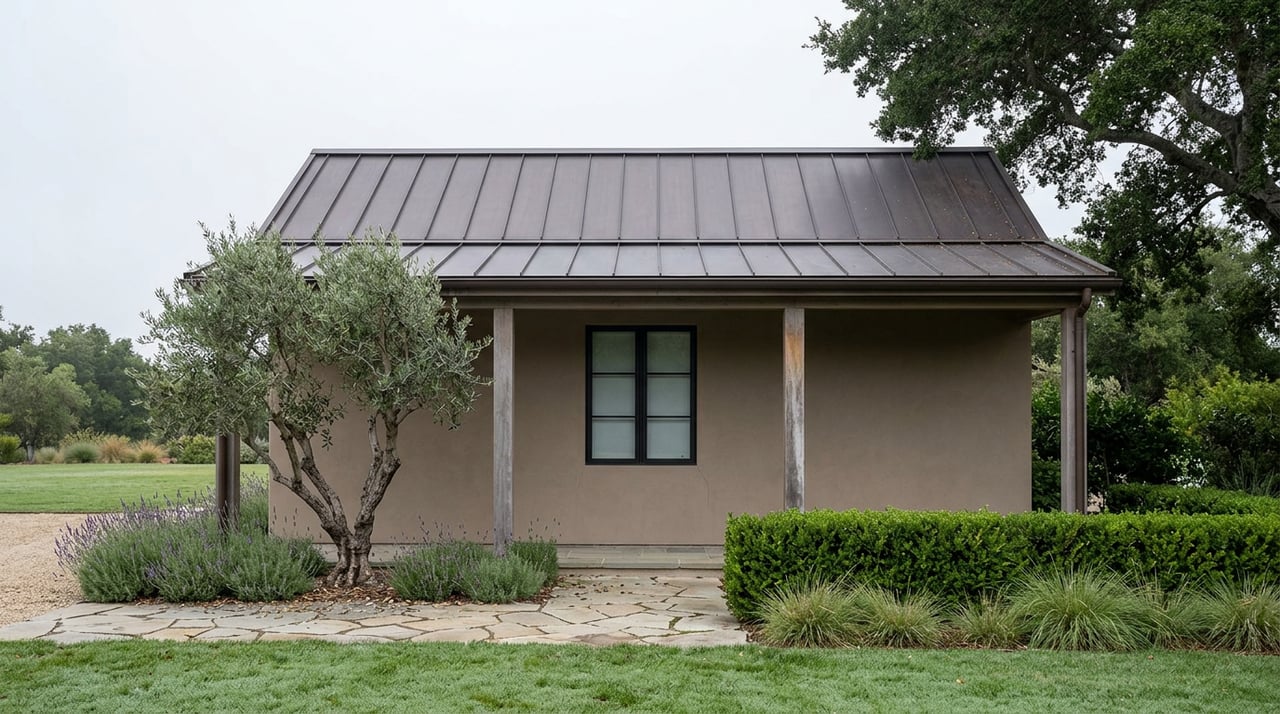
Sonoma's New ADU Amnesty Comes With a Catch Most Sellers Don't See Coming
September 17, 2026
September 17, 2026
For years, the standard advice for a Sonoma Valley seller with an old guest cottage out back went something like this: don't touch it. If grandma's in-law unit never got a permit, if the detached studio behind the main house has been quietly housing a cousin or a home office since the 1980s, the safest move was to disclose it as an unpermitted structure, let the buyer's agent flag it, and let the price reflect the risk. Permits were hard to get after the fact. Bringing an old structure up to current code, current setbacks, current size limits, often meant tearing out half of what made it useful in the first place.
That advice just got outdated, at least for some properties.
On December 9, 2025, the Sonoma County Board of Supervisors adopted Ordinance No. 6544, which took effect January 8, 2026. Buried inside a routine alignment with state housing law is a change that matters more to sellers than almost anything else in the ordinance: consistent with state Assembly Bill 2533, Permit Sonoma will no longer deny a permit for an existing unpermitted accessory dwelling unit or junior ADU built before January 1, 2020, unless the structure is genuinely substandard under California Health and Safety Code Section 17920.3. Permits also can't be conditioned on meeting today's setback, size, or height standards. In plain terms, the county stopped treating "it doesn't meet 2026 code" as a reason to say no.
That is a real shift in leverage for anyone sitting on an old unpermitted unit. It is not, however, a blanket amnesty for every property in the Sonoma Valley. The rule has a map problem and a calendar problem, and both can trip up a seller who assumes the new policy just applies to them.
The amnesty described above lives inside Permit Sonoma, the department that handles building and zoning for unincorporated Sonoma County. That is a meaningfully different jurisdiction from the incorporated City of Sonoma, which runs its own ADU program under its own municipal code and has not adopted a matching pre-2020 amnesty.
If your property sits inside the city limits around the Plaza, the county's new grace period for older, out-of-spec units simply does not govern your permit. The city still requires a building permit for any ADU, still enforces its own minimum floor area of 150 square feet, and still applies its own fire-resistive construction and parking standards through the Sonoma Municipal Code. A homeowner two blocks apart from another, one inside the city and one in the unincorporated valley, can be looking at two entirely different legalization paths for what looks like an identical backyard cottage.
Here is the comparison that actually matters before anyone assumes the new rule applies to them:
| Unincorporated Sonoma County (Permit Sonoma) | City of Sonoma | |
|---|---|---|
| Pre-2020 unpermitted ADU/JADU | Cannot be denied a permit unless substandard under Health & Safety Code §17920.3, per Ordinance No. 6544 | No matching amnesty in the current municipal code |
| Setback/size compliance for legalization | Not required to meet current standards under the new ordinance | Building permit required; standard setback and size rules apply |
| Short-term rental of ADU | Prohibited; rentals must run 30 days or longer | Prohibited; rentals must run 30 days or longer |
| Governing authority | Permit Sonoma, County of Sonoma | City of Sonoma Planning Department |
The one thing both jurisdictions agree on is that neither allows an ADU to be rented for less than 30 days at a time. If part of the appeal of legalizing a unit was picturing it as a short-term rental listing, that door stays closed regardless of which side of the boundary the property sits on.
Before a seller assumes the amnesty applies, the first real step is confirming which authority actually has jurisdiction over the parcel. That is a five-minute question for a title company or the county assessor's office, and it is the difference between a straightforward legalization and a project that still requires a full-code retrofit.
The other detail worth sitting with is what "substandard" actually means under the new rule. It is not a synonym for "old" or "doesn't meet modern code." Health and Safety Code Section 17920.3 defines substandard conditions as those that endanger life, limb, health, property, safety, or welfare, things like structural failure, inadequate sanitation, faulty wiring, or serious fire hazards. A unit that is three feet closer to the property line than current code allows, or 150 square feet over today's detached ADU maximum, is not automatically substandard. Those are exactly the kinds of dimensional issues the new ordinance says the county can no longer use as grounds for denial.
That distinction matters for how a listing gets marketed. A cottage that was written off for years as "unpermitted, buyer beware" may, on inspection, turn out to be structurally sound and simply out of step with current setback rules, which under the new policy is no longer disqualifying. Permit Sonoma has indicated a substandard conditions self-assessment checklist is coming, which will give sellers a more concrete way to check their own structure against the actual legal bar before spending money on plans.
A meaningful share of the properties this rule was written for sit on well water rather than public service, which is common across the Sonoma Valley's unincorporated pockets. If the unpermitted unit in question relies on a well, and that well falls within a Class 4 Groundwater Availability Area, the legalization path still runs through a dry weather well test to confirm the well meets minimum yield requirements under the county's Net Zero Groundwater Use guidelines.
That test has to be conducted between July 15 and October 1. Miss that window, and the well testing piece of the legalization simply waits until the following summer, regardless of how motivated the seller is or how close the transaction is to closing. Anyone who wants to bring a well-served unit into compliance before listing needs to work backward from that calendar, not from the closing date.
The value case for going through this process is straightforward once the amnesty removes the setback and size objection. An unpermitted structure typically gets treated by appraisers and lenders as bonus space at best, a liability at worst. A permitted ADU is marketable square footage. It can factor into comparable sales, it can be described accurately in a listing rather than hedged around, and for a buyer thinking about multigenerational living or long-term rental income (30 days minimum, per both county and city rules), it becomes a documented feature instead of a disclosed risk.
For a seller who has been sitting on a decades-old cottage wondering whether it was worth the paperwork, the calculus changed in January. For a buyer evaluating a Sonoma Valley property with a similar structure already in place, it is worth asking directly whether the seller has pursued legalization under the new ordinance, and if not, whether the property sits in the county or the city, since that answer determines whether the amnesty is even on the table.
Does this apply to Junior ADUs too, not just full ADUs? Yes. Ordinance No. 6544 and the underlying AB 2533 policy cover both ADUs and JADUs built before January 1, 2020.
Can I short-term rent the unit once it's legalized? No. Both the unincorporated county and the City of Sonoma require any ADU or JADU rental to run 30 days or longer.
What if I'm not sure whether my property is inside city limits or unincorporated county? Check with the county assessor's parcel report or a title company before assuming either rule applies. The two jurisdictions run separate ADU programs with separate outcomes for a pre-2020 unit.
What if my unit's well is in a water-scarce area? Pull your parcel's Groundwater Availability Area classification and, if it falls under Class 4, plan the dry weather well test for the July 15 to October 1 window well ahead of any listing date.
If you're weighing whether an old structure on your Sonoma Valley property is worth legalizing before you list, or trying to understand what a similar unit means for a property you're considering, Amanda Shone can walk through the specifics with you and help you get your instant home valuation as a starting point for that conversation.
Stay up to date on the latest real estate trends.
Your real estate journey starts here.